⚡ Emergency roof repairs 24/7 — Call now: 01789 509542
⭐ 4.9/5 · Conservation Specialists

Heritage Roofing in Stratford

Conservation and listed-building roofing for Stratford-upon-Avon — matched clay, slate and stone, hydraulic lime, and leadwork to heritage standard. Consent handled, done right.

πŸ“ž Call Now: 01789 509542

Tell us the job in 30 seconds. No pushy sales, no call-out fee.

20+
Years Local
127
5★ Reviews
24/7
Emergency
10yr
Guarantee

Heritage roofing in Stratford means matched materials — clay peg or plain tile, Welsh slate or Cotswold stone — laid in hydraulic lime, never cement, with leadwork to code 4 and 5 standard. Listed and conservation work requires consent, which we advise on and handle with Stratford-on-Avon District Council. Priced per specification after survey.

Honest advice

How to Tell You Need Heritage Roofing

Heritage roofing is a specialism in its own right β€” the question is usually whether the work needs consent and which traditional materials are correct for your building.

When it is not the answer: Where a sound historic roof only needs a slipped tile or a lead detail re-dressed, we make the conservation repair rather than proposing renewal β€” keeping original fabric is the goal. Read the full guide.

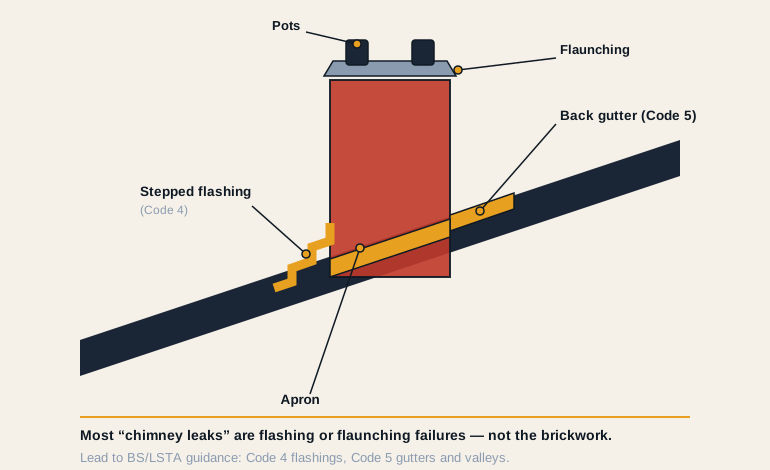
Detail diagram of chimney flashing showing step flashing, soakers, back gutter and lead apron
How chimney flashing keeps water out
✓ NFRC Registered
✓ Fully Insured
✓ 10-Year Guarantee
✓ Free Quotes
✓ No Hidden Costs
✓ Since 2003
Heritage Roofing

Conservation & Listed Building Roofing in Stratford

Stratford-upon-Avon has one of the richest concentrations of historic buildings in England, from the timber-framed properties of the Old Town to the Victorian terraces that grew around them. Roofing these buildings correctly is a specialism in its own right — it demands the right materials, traditional methods, and an understanding of the consent process. This is work our conservation lead handles across Stratford and Warwickshire.

Listed Building and Conservation Consent

Stratford’s Old Town is a designated conservation area, and the town holds a high density of listed buildings. Any roofwork affecting the character of a listed building — a change of material, a change of mortar type, a new roof window — requires listed building consent. Material changes on visible elevations in the conservation area require conservation area consent. We advise on what is needed at survey, liaise with the conservation officer at Stratford-on-Avon District Council, and never carry out work that would breach consent, which on a listed building is a criminal matter.

Matching Materials

Heritage roofing is only correct when the materials match. That means clay peg tiles for the earliest stock, clay plain tiles for Victorian and Edwardian properties, Welsh slate where slate was original, and Cotswold stone slate on the limestone properties of the southern CV37 villages. We source from conservation suppliers and salvage, matching colour, texture and profile. Hydraulic lime mortar is used throughout — NHL 3.5 for Victorian brick, NHL 2 for softer earlier fabric — because Portland cement damages historic masonry and is not accepted on listed or conservation work.

Leadwork on Heritage Properties

Leadwork is central to heritage roofing and deserves its own attention. Stratford’s period properties rely on lead for chimney flashings, valley liners, the tops of bay windows, parapet gutters and dormer details. Correctly installed code 4 and 5 lead, dressed to the right bay sizes to control thermal movement, lasts 80 years or more. We replace and re-dress lead to Lead Sheet Training Academy standards — code 5 for parapet gutters and exposed conservation work, code 4 for standard flashings — and we chase flashings into cut joints pointed in lime, never surface-fixed with mastic. Getting the leadwork right is what keeps a heritage roof watertight for generations.

In Detail

Ventilation, Timber and the Case for Repair

Breathability and Ventilation in Period Roofs

Historic roofs were built to breathe. Sealing them with modern impermeable membranes traps moisture and rots the very timbers you are trying to protect. On Stratford’s period properties we specify breathable underlays and maintain traditional ventilation paths, so the roof space stays dry the way the original construction intended. This is as important as the visible tile or slate, and it is where inexperienced roofers most often cause long-term harm to an old building.

Repairing Historic Timber

Once a heritage roof is open, we frequently find historic timber — rafters, purlins and wall plates — that can be repaired rather than replaced. Conservation practice, and often the terms of listed building consent, favour retaining original fabric wherever it is sound. We splice and strengthen historic timber where we can, replacing only what has genuinely failed, which preserves both the building’s character and its material history.

Why Repair Beats Replacement

The guiding principle of good heritage work, and of the SPAB, is to repair rather than replace — to conserve original material and intervene as little as necessary. A slipped historic tile re-fixed, a failed lead detail renewed, a section of pointing made good: these keep a Stratford building authentic and are usually cheaper than wholesale renewal. We always look for the conservation repair before proposing replacement.

Working With Conservation Suppliers

Sourcing is half the battle on heritage work. We work with established conservation tile and slate suppliers and reclaim yards to secure materials that genuinely match — the right clay peg tile, the correct Welsh slate size, matching Cotswold stone. On listed work we confirm the source and, where required, agree it with the conservation officer before any strip begins, so there is never a gap between removing the old covering and having the correct replacement to hand.

Patience, Not Speed

Heritage roofing rewards patience. Material lead times can run to weeks, lime mortar cures more slowly than cement, and careful hand-work simply takes longer than a modern estate re-roof. We build these realities into the programme from the start, so the work is done to a standard that respects the building rather than rushed to a modern timetable that would compromise it.
Local Knowledge

Stratford’s Historic Roofscape

The Old Town Conservation Area

The streets at Stratford’s heart — Chapel Street, Church Street, Old Town, Sheep Street and the market lanes — form a designated conservation area with a high density of listed buildings, many timber-framed and dating to the Tudor and Jacobean periods. These carry clay peg tile and demand the most careful heritage work in our territory.

Victorian and Edwardian Period Stock

Around the historic core, the Victorian and Edwardian terraces of Evesham Place, the Alcester Road and Rother Street carry clay plain tile and, in places, Welsh slate. Re-roofing these requires matched clay or slate and lime mortar to preserve the character that the conservation designation protects.

Rural Cotswold-Fringe Properties

Toward Shipston and the southern CV37 villages, limestone farmhouses and cottages carry Cotswold stone slate — split limestone laid to diminishing courses. This is specialist, slow work with long material lead times, priced per specification and planned around confirmed stone supply.

Pricing

Heritage Roofing Costs

JobTypical rangeNotes
Clay peg tileΒ£160–£250/mΒ²Historically correct for early stock
Welsh slateΒ£180–£280/mΒ²Victorian slate-roofed property
Cotswold stone slateΒ£180–£280/mΒ²Rural limestone properties
Lime repointingΒ£250–£650Per stack or elevation
LeadworkPer specificationFlashings, valleys, bay tops

What moves the price

Worked example: Re-roofing a listed Old Town terrace in matched clay peg tile with lime bedding, including the consent process, was priced per specification at around Β£240/mΒ².

Staged payment against specification, with nothing before matched materials are secured. VAT shown separately.

Historic England guidance requires like-for-like replacement of historic roof coverings and the use of lime rather than cement mortar on pre-1919 fabric; the SPAB advocates repair over replacement to conserve original material wherever possible.

— Historic England / SPAB (Society for the Protection of Ancient Buildings)

Ready to Get Started?

Free quotes — no call-out fees — honest advice.

πŸ“ž Call: 01789 509542
The process

From First Call to Sign-Off

1. Heritage survey

We assess the historic materials, the condition and what consent the work requires.

2. Consent & sourcing

We advise on listed or conservation consent, liaise with the conservation officer and source matched materials.

3. Written itemised quote

A specification-led quote naming the materials, mortar and leadwork.

4. Traditional installation

We carry out the work in matched clay, slate or stone with hydraulic lime and code 4/5 lead.

5. Documentation & sign-off

We document the work for the listing record and hand over the guarantee.

Timescales

Job Durations at a Glance

JobTypical duration
Conservation tile repair1–2 days
Lime repointing (elevation)2–3 days
Heritage re-roof section1–2 weeks
Cotswold stone slate workPer specification

Lime mortar cures slowly and needs frost-free conditions; heritage material lead times can add weeks, which we build into the programme.

Access

Access, Scaffolding & Permits in Stratford

Heritage work needs careful, scaffolded access to protect fragile fabric and give safe standing time; it is always itemised in the quote. Scaffold is specified for: all heritage roof and stack work β€” fragile historic fabric demands controlled access - always itemised in your written quote, never a hidden extra, and we arrange it.

Victorian terraces off the Alcester Road and the Old Town lanes usually mean rear-access scaffold and permit-controlled pavement space, while the post-war Bishopton and Clopton estates give straightforward front access with room for a skip on the drive. Pavement scaffold and skip permits go through Stratford-on-Avon District Council; allow a few working days on streets like Sheep Street, Chapel Street, Church Street where space is tight.

Guarantee

What the 10-Year Guarantee Actually Covers

Our workmanship is guaranteed for 10 years; correctly laid clay, slate and lead have service lives measured in many decades to a century.

If a fault appears in covered work, we come back and put it right. No quibbling, no re-charge.

Standards & workmanship

What Good Looks Like

Historic England guidance favours repair and like-for-like replacement in traditional materials over wholesale renewal β€” keeping original fabric is both the conservation goal and usually the cheaper one. β€” to Historic England

Matched clay, slate or stone laid on lime with correctly dressed lead is what keeps a historic Stratford roof both authentic and consented. We work to that standard and document it, which is what a conservation officer and a future owner will both expect to see.

Good to know

Disruption, Mess & Weather

Heritage work is slower and more careful by nature; scaffold stays up longer, and we protect the building and its surroundings throughout. You do not need to stay home for external work - we just need power and access agreed in advance.

We schedule lime work for frost-free spells; the Old Town's exposure and the Avon's damp both inform how we detail a heritage roof. The Avon Valley's humidity slows drying times through autumn and speeds moss growth on shaded, north-facing slopes near the watermeadows.

Covering CV37, CV35, CV36, B49, B50 and surrounding postcodes.

Customer Reviews

Heritage Roofing Reviews — Stratford

★★★★★

“They re-roofed our listed Old Town property in matched clay peg and handled the entire consent process with the council. The conservation officer was complimentary about the work. Faultless.”

Frances M. · Old Town, Stratford
★★★★★

“Leadwork on our Victorian bay and parapet gutter — code 5 lead, dressed properly, chased into lime pointing. Two firms had botched it with mastic before. Finally watertight and correct.”

Caroline B. · Evesham Place, Stratford
★★★★★

“Cotswold stone slate repairs on our village property near Shipston. They sourced matching stone and laid it to diminishing courses exactly as the original. Real craftsmanship.”

Timothy R. · near Shipston, CV37
FAQ

Frequently Asked Questions

Yes, where the work affects the building’s character — a change of material, mortar type, or a new roof window all require listed building consent. Like-for-like repair in identical materials generally does not. We advise at survey and liaise with the conservation officer.

Clay peg tiles for the earliest stock, clay plain tiles for Victorian and Edwardian properties, Welsh slate where slate was original, and Cotswold stone slate on limestone properties. All with hydraulic lime mortar — never cement.

Portland cement is harder and less permeable than historic fabric; it traps moisture and spalls soft brick and stone over time. On listed buildings its use can constitute unauthorised works. Hydraulic lime is the correct, breathable specification.

Yes. Leadwork — flashings, valley liners, bay tops and parapet gutters — is central to heritage roofing. We install code 4 and 5 lead to Lead Sheet Training Academy standards, chased into cut joints and pointed in lime, never surface-fixed with mastic.

It is priced per specification after survey, as materials and consent requirements vary. Indicative material rates are £160–£250/m² for clay peg, £180–£280/m² for Welsh slate or Cotswold stone, with leadwork and lime repointing priced separately.

Yes. We advise on what consent is needed, liaise with the conservation officer at Stratford-on-Avon District Council, and ensure the specification meets requirements before work begins. We never carry out work that would breach consent.

Yes. We source matched clay peg or plain tiles from conservation suppliers and salvage, matching colour, texture and profile. Where an exact match is critical, we confirm the source before any strip work begins.

Get In Touch

Free Roofing Quote — Stratford-upon-Avon

No call-out fees. No obligation. Local roofers covering Stratford-upon-Avon and Warwickshire since 2003.

01789 509542
✉ Email Us Instead