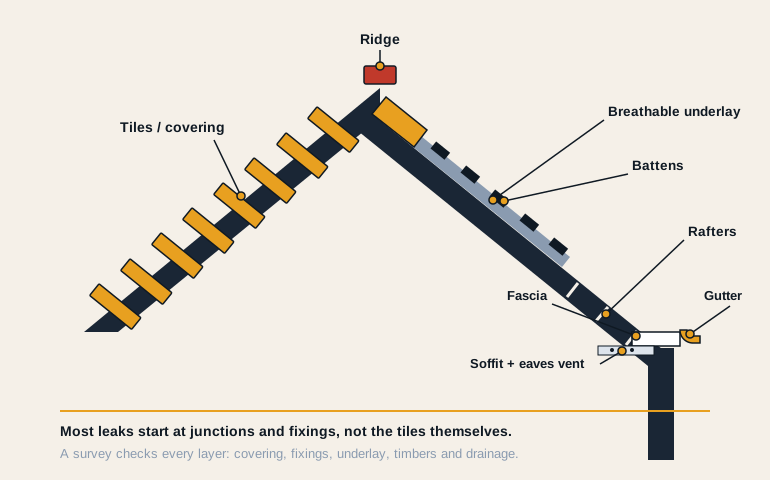
You can inspect a roof safely from the ground with binoculars — never go onto the roof yourself. Check the ridge for displaced tiles first, then the slopes for slipped or broken tiles, then chimney flashings and gutter profile. Do this each October before storms and again in March after winter.
You do not need to go onto the roof — and should not — to carry out a useful annual visual inspection of your Warwickshire property. A pair of binoculars, a dry day and 15 minutes spent looking from different angles around the building gives you most of the information you need to identify developing problems before they become urgent ones. This guide covers what to look for and what it means.
What You Need and When to Do It
Binoculars (8x or 10x magnification), a dry day with good light, and access to all four sides of the building. Do this annually in October before the main autumn storms, and again in March after the winter. The October inspection catches developing problems before the wettest months; the March inspection identifies anything that has deteriorated over winter.
Displaced ridge and hip tiles are the most wind-sensitive elements of a pitched roof; NFRC guidance recommends inspection after severe weather events, which for exposed Warwickshire sites means several times each winter.
— NFRC — roof maintenance guidance
The Ridge and Hip — Check First
The ridge is the apex of the roof; hips are the angled ridges on hipped roofs. Both are bedded in mortar or mechanically fixed and are the most wind-exposed elements of the roof. What to look for:
- Any ridge tile that appears to have moved position — slightly offset from the line of the ridge, or sitting higher on one side than the other
- Gaps in the mortar bedding visible between ridge tiles
- Missing sections of ridge mortar, visible as dark gaps along the ridge line
- Any hip tile that has slipped down the hip rafter
The Main Tile or Slate Slopes
- Slipped tiles: a tile that has dropped below its neighbours, exposing the tile beneath it. Common on nail-sick roofs across Warwickshire's post-war estate stock.
- Broken tiles: visible as a darker colour at the break point or as a missing section of the tile face.
- Moss and lichen: heavy growth on north-facing slopes is normal on older properties; treatment is maintenance rather than urgent. Where moss is physically lifting tiles on a steep pitch, that warrants a closer look.
- Sagging between rafters: a visible wave or dip in the tile line indicates batten failure or structural settlement below. This is a rare finding but warrants immediate professional assessment.
Valleys, Flashings and Gutters
- Valley lines: look for debris accumulation in the valley (darker zone between two slopes). A valley that appears uniformly dark with compacted debris needs clearing before the autumn rains.
- Chimney flashings: any visible gap between the lead flashing and the chimney brickwork. See the chimney inspection guide for full detail.
- Gutter profile: from the ground, check whether gutters appear to be hanging level or whether sections have pulled away from the fascia. A gutter that hangs lower at one end than the other has lost its bracket fixing.
When to Call a Roofer
Call us for a free survey if you observe: any displaced or missing ridge tile; any slipped tile on a steep slope (it may displace further in the next wind event); a visible gap in chimney flashings; guttering that has separated from the fascia and is directing water against the wall. These are all advisory-level findings that are significantly cheaper to address before the autumn storm season than after.
Contact us for an emergency call-out if: multiple tiles are off the roof after a storm event; there is active water ingress inside the building; or a ridge tile has fallen and potentially damaged tiles below it.
Free Quotes Across Stratford & Warwickshire
NFRC registered. No call-out fees. Free written quotes within 24 hours.
📞 Call 01789 509542