Tell us the job in 30 seconds. No pushy sales, no call-out fee.
20+
Years Local
127
5★ Reviews
24/7
Emergency
10yr
Guarantee
Chimney repointing in Stratford-upon-Avon costs £250–£650 per stack in hydraulic lime mortar, with flaunching renewal at £150–£350 and cowls at £80–£200. We never use cement on Victorian brick — it traps moisture and damages the stack. Free surveys, 10-year guarantee.
Honest advice
How to Tell You Need Chimney Repointing
Eroded mortar joints and a cracked mortar cap are the tell-tale signs — and on a Stratford period stack the fix must be lime, never cement.
Eroded, receding or missing mortar joints on the stack
Mortar or grit falling into the fireplace or onto the roof
Cracked flaunching — the mortar cap that beds the pots
White salt staining or damp on the chimney breast inside
When it is not the answer: If only the flaunching has cracked, we renew that alone rather than repointing the whole stack — no need to do more than the stack requires. Read the full guide.
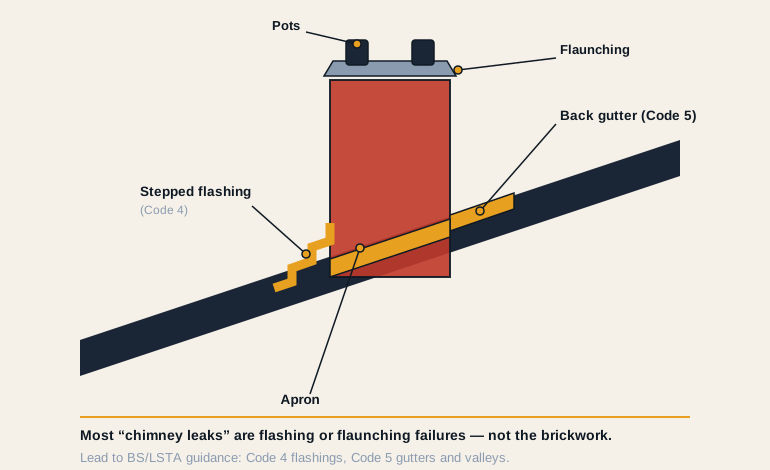
How chimney flashing keeps water out
✓ NFRC Registered
✓ Fully Insured
✓ 10-Year Guarantee
✓ Free Quotes
✓ No Hidden Costs
✓ Since 2003
Chimney Repointing
What Does Chimney Repointing in Stratford Involve?
Chimney repointing is a distinct job from general chimney repair — it addresses the mortar joints, the flaunching that holds the pots, and the pots and cowls themselves, rather than the flashing where the stack meets the roof. On Stratford’s older housing stock, repointing is one of the most common chimney jobs we carry out, because the lime mortar in Victorian and Edwardian stacks reaches the end of its life after a century of weathering.
What Repointing Actually Involves
We rake out the failed mortar joints to a sound depth, brush and dampen the joints, and repoint in a mortar matched to the original — hydraulic lime on period brick, never Portland cement. On a Stratford Victorian stack, using cement would be actively harmful: it is harder than the soft Victorian brick and traps moisture, spalling the brick face over time. Lime mortar breathes, flexes with the brick, and is the correct and often the only acceptable specification on conservation-area stacks.
Flaunching, Pots and Cowls
The flaunching is the sloping mortar cap at the top of the stack that beds the pots and sheds water. When it cracks — common on exposed Stratford stacks after decades of frost — water enters the top of the stack and pots loosen. Renewing the flaunching, re-bedding or replacing pots, and fitting cowls (anti-downdraught, or bird and rain guards on unused flues) is often done in the same visit as repointing for a complete stack overhaul.
In Detail
How Long It Lasts and What to Watch For
How Long Does Repointing Last?
Correctly executed lime repointing on a Stratford period stack should last 50–80 years — comparable to the original. The key is the right mortar mix and proper joint preparation; a rushed job in the wrong material fails within a few years. This is why we rake joints to a sound depth and match the mortar carefully rather than smearing new mortar over old, which never bonds and simply falls out.
Signs You Can See From Inside
You do not always need to see the stack to know it needs attention. Damp patches on the chimney breast in an upstairs room, white salt staining on the internal brickwork, or a musty smell in a room with a disused fireplace all point to water entering through failed pointing or flaunching above. If you see these on a Stratford property with an older stack, it is worth a survey before the next winter.
Repointing as Part of Wider Chimney Care
Repointing is often the moment to address the whole stack economically. With scaffold already up, renewing the flaunching, fitting cowls, and re-dressing the lead flashing in the same visit avoids paying for access twice. We assess the full stack at survey and set out what is worth doing now versus what can safely wait, so you make one informed decision rather than a series of reactive ones.
Local Knowledge
Chimney Stacks Across Stratford
Victorian and Edwardian Stacks
The Old Town, Evesham Place and the Victorian terraces off the Alcester Road carry tall period stacks whose lime pointing, flaunching and pots reach end of life together after a century-plus of weathering. These are the stacks we repoint most, and they must be done in lime, not cement, both for the fabric and for conservation compliance.
Weather Exposure and the Prevailing Face
Stratford’s prevailing weather comes from the south-west, so the south-west face of a stack takes the most driving rain and fails first. On exposed stacks — taller Victorian chimneys and properties on the higher ground toward Welcombe — it is common to find the windward face heavily eroded while the sheltered face is still sound.
Estate Stacks and Cowls
On the post-war Bishopton and Clopton estates, stacks are lower and in cement-based mortar of their era; here the common jobs are flaunching renewal and cowl fitting — anti-downdraught cowls for working flues, and vented caps for the many flues now redundant since central heating replaced open fires.
Pricing
Chimney Repointing Costs
Job
Typical range
Notes
Full stack repointing
£250–£650
Hydraulic lime, per stack
Flaunching renewal
£150–£350
Re-bed pots, renew the cap
Chimney cowls
£80–£200
Per pot, anti-downdraught or guard
Repoint + flaunch + cowl
£450–£900
Combined stack overhaul
Redundant stack capping
£200–£500
Vented cap on an unused flue
What moves the price
Stack height and how exposed the windward face is
Lime versus cement (lime is required on period brick)
Whether flaunching, pots and cowls are done in the same visit
Scaffold access to the stack
Worked example: Repointing, re-flaunching and an anti-downdraught cowl on a Bishopton estate stack came in around £620 in one scaffolded visit.
Staged payment on larger stack works with nothing before scaffold and materials are on site. VAT shown separately.
The Building Regulations require chimneys and flues to be structurally sound and weathertight; NFRC technical guidance identifies failed pointing and flaunching as a leading cause of chimney-related damp in older housing.
We assess the pointing, flaunching, pots and flashing and identify what needs renewing.
2. Written itemised quote
A fixed price naming the mortar, the scope and any cowls.
3. Scheduling & scaffold
We arrange scaffold for safe stack access and any street permit.
4. The work
We rake out failed joints and repoint in hydraulic lime matched to the original, never cement on period brick.
5. Cleanup & sign-off
We renew flaunching and fit cowls as needed, strike the scaffold and hand over the guarantee.
Timescales
Job Durations at a Glance
Job
Typical duration
Full stack repointing
1–2 days
Flaunching renewal
Half a day to a day
Repoint + flaunch + cowl
1–2 days
Cowl fitting only
1–2 hours
Lime pointing needs frost-free conditions to cure, so we schedule stack work around hard-winter spells.
Access
Access, Scaffolding & Permits in Stratford
Repointing needs scaffold for safe standing at the stack and a quality result; it is included and itemised in the quote. Scaffold is specified for: the stack — repointing is scaffolded for safety and finish - always itemised in your written quote, never a hidden extra, and we arrange it.
Victorian terraces off the Alcester Road and the Old Town lanes usually mean rear-access scaffold and permit-controlled pavement space, while the post-war Bishopton and Clopton estates give straightforward front access with room for a skip on the drive. Pavement scaffold and skip permits go through Stratford-on-Avon District Council; allow a few working days on streets like Sheep Street, Chapel Street, Church Street where space is tight.
Guarantee
What the 10-Year Guarantee Actually Covers
Our workmanship is guaranteed for 10 years; correctly executed lime repointing on a period stack lasts 50–80 years, matching the original.
Covered: workmanship for 10 years, in writing, transferable if you sell.
On top: manufacturer warranties on materials (terms vary by product).
Not covered: storm or impact damage - that is an insurance matter, and we will document it for your claim.
If a fault appears in covered work, we come back and put it right. No quibbling, no re-charge.
Standards & workmanship
What Good Looks Like
Historic England is unambiguous that period masonry must be repointed in lime rather than cement — cement is harder than the brick and drives decay into the surrounding stack. — to Historic England
Raking out failed joints and repointing in matched hydraulic lime lets a stack breathe and lasts as long as the original pointing. We match the mortar to the brick and the era, which on Stratford's Victorian and older stacks is the difference between a 60-year repair and a five-year one.
Good to know
Disruption, Mess & Weather
Scaffold up for a day or two with some mess at the base of the stack; the fireplace stays usable unless capped. You do not need to stay home for external work - we just need power and access agreed in advance.
Stack work runs through most of the year; we avoid pointing in frost, which stops lime setting. Stratford's prevailing south-westerlies erode the windward face first. The Avon Valley's humidity slows drying times through autumn and speeds moss growth on shaded, north-facing slopes near the watermeadows.
Covering CV37, CV35, CV36, B49, B50 and surrounding postcodes.
Customer Reviews
Chimney Repointing Reviews — Stratford
★★★★★
“Two Victorian stacks repointed in lime — they explained exactly why cement was wrong for the brick. Both bone dry through the winter. Proper heritage work.”
Caroline B. · Evesham Place, Stratford
★★★★★
“Cracked flaunching and a leaning pot on our Old Town house. Re-flaunched, pot re-bedded, cowl fitted, all in a day. Scaffold and the street permit sorted by them.”
Graham T. · Old Town, Stratford
★★★★★
“Repoint, flaunch and an anti-downdraught cowl on the Bishopton stack — the fire had been smoking back for years. Fixed it completely. Fair price, tidy work.”
Diana S. · Bishopton, Stratford
FAQ
Frequently Asked Questions
Full stack repointing in Stratford costs £250–£650 per stack in hydraulic lime. Renewing the flaunching adds £150–£350, and cowls are £80–£200 per pot. A combined repoint, flaunch and cowl overhaul runs £450–£900.
Portland cement is harder than soft Victorian brick and traps moisture, spalling the brick face over decades. Hydraulic lime breathes and flexes with the brick. On Stratford conservation-area stacks, lime is the correct and often the only acceptable specification.
Flaunching is the sloping mortar cap at the top of the stack that beds the pots and sheds water. When it cracks — common on exposed Stratford stacks after decades of frost — water enters the stack and pots loosen. Renewing it restores weathertightness.
Look for eroded or missing mortar joints on the stack, mortar falling into the fireplace or onto the roof, white salt staining on the brickwork, or damp on the chimney breast inside. Any of these means the pointing should be renewed this season.
If a flue is redundant, capping it — while retaining a vent to keep the flue ventilated — stops rain, birds and downdraught while preventing the damp that sealing a flue completely can cause. We fit vented caps for exactly this reason.
Yes. Where both the pointing and the lead flashing are failing, we carry out the repointing, flaunching and flashing in a single scaffold visit, which is more economical than separate trips.
Usually yes, for safe access and a quality result on anything but the lowest stacks. We include access in the quote and arrange any street permits on the narrow Old Town lanes.